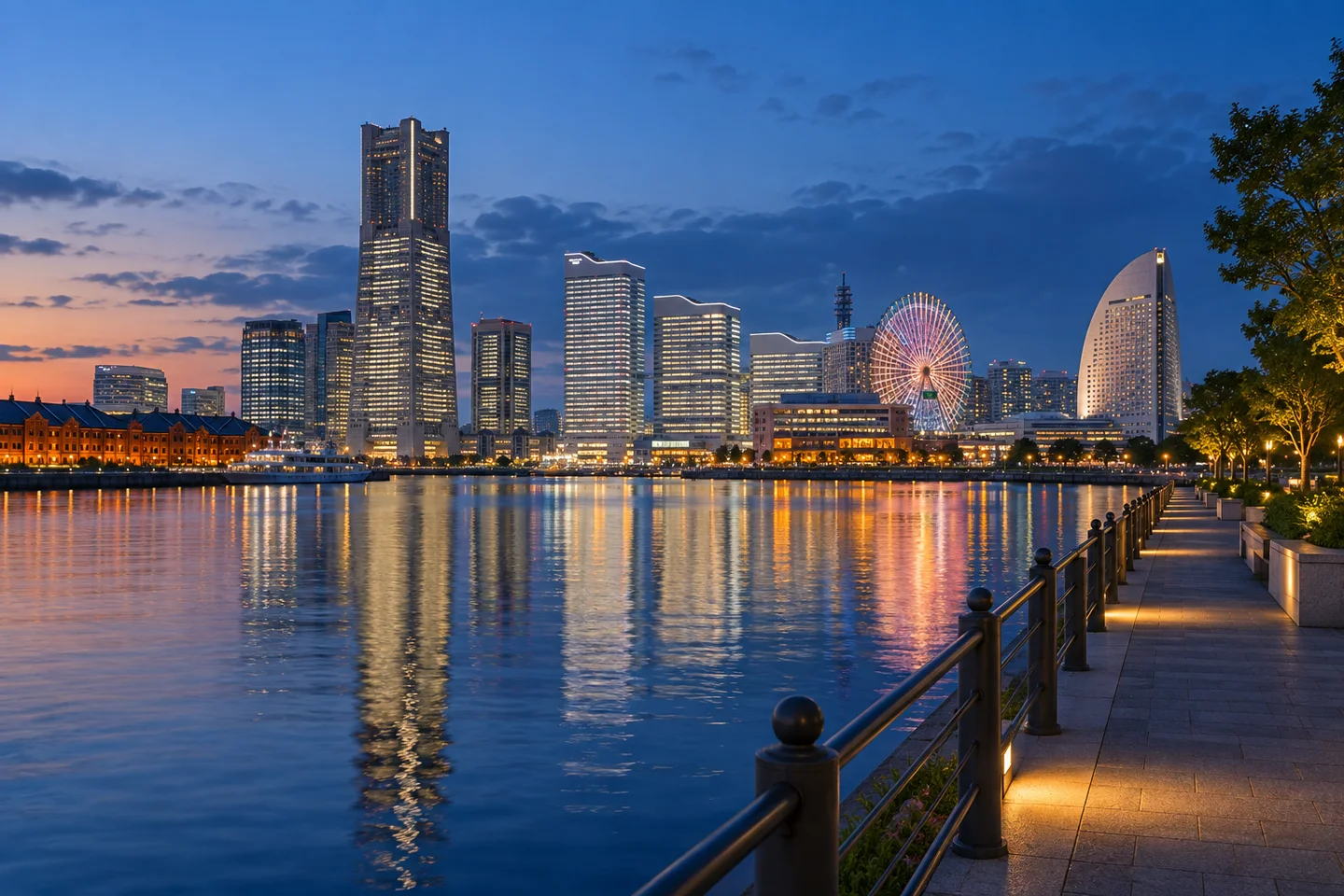
Put Yokohama on your own working map
Yokohama may bring to mind open views, particular streets or weekend scenes. A month's assignment, however, will not happen inside the same photograph every day. Your most familiar sights may be a workplace entrance, a station exit and the final stretch home at night. Put those real positions on the map before choosing accommodation.
Record the actual work address and confirm which entrance you must use. Knowing that a company is in Yokohama is insufficient for evaluating a commute. If you move between sites, list each site's attendance dates and times, then decide which direction merits priority. The city name defines an area; the working route becomes your everyday life.
Check for days requiring travel to Tokyo or elsewhere in Kanagawa. Occasional journeys deserve different weight from daily attendance. Avoid sacrificing the month's main route for one airport arrival or one meeting. Writing down frequency reveals which conditions will have a continuing effect on your stay.
Verify routes and travel times against current searches and actual dates. Applying the same conditions to every candidate is more reliable than declaring one area suitable for everyone. You are seeking a starting point that lets work proceed and leaves energy for living afterward, rather than an abstract “best location.”
Imagine the morning departure and evening return separately
Accommodation searches often focus on reaching work, treating the return as the same route reversed. In reality, you may be tired, carrying food or stopping elsewhere first. Imagine morning and evening separately, particularly the station-to-building stretch, and identify any part you still do not understand.
If you work remotely on some days, include the day without a commute. Suitable seating and desk space, conditions for completing planned work and lunch arrangements all shape time spent in the room. Some days without travel do not remove the need to check whether the room supports those working hours.
Assess after-work convenience through one meal. Does the route home offer food or shopping that suits you, and can you eat comfortably after bringing it back? Check current shops and services rather than assuming advertising about “excellent local amenities” means every personal requirement is met.
Finally, imagine an ordinary workday with bad weather. You want no detours or complicated decisions, simply to return and rest. If that day still functions, convenience has a concrete meaning. Conditions for rest often lie within everyday routes, not only in an attractive view outside the window.
Give work and rest different states inside the room
A business-trip room often contains a laptop, dinner and travel bags together. Work items left spread out can make the end of a meeting feel like only a brief pause from the screen. Establish a daily closing action: save files, check tomorrow's tasks and put equipment away, leaving the table for what comes next.
With limited table space, assign uses in sequence. Keep only work essentials out while working, clear space before meals and bring out a book for reading later. This is not about achieving showroom neatness, but preventing activities from crowding one another. A small room benefits from a basic state that is easy to restore and use again.
Before video calls or focused work, check communications and equipment conditions against the property's information. Learn the network name, connection procedure and support channel after arrival. Wi-Fi in the room is not a guarantee for every possible work requirement. Prepare any necessary fallback according to company expectations.
Let dinner, washing or a brief outing form a complete period after work. If you must work again later, give that period a beginning and end rather than spending the whole evening potentially opening the laptop at any moment. Rest need not be lengthy, but knowing what you are doing now helps.
Enjoy the city's appeal when you have room for it
A city full of associations can make you feel you should explore every day. On a demanding evening, eating nearby and returning may be the most comfortable choice. Intensive sightseeing need not prove your accommodation was worthwhile. Establish stable weekdays first, then place genuinely desired destinations in periods with more energy.
Divide exploration into three sizes: a short walk around dinner, half a day in a neighbourhood, or an outing requiring a full day off. Include return travel and time after coming home, not only time at the destination. Clear sizes make it easier to adapt to that week's work without rebuilding every plan.
For waterfronts, parks or other outdoor spaces, check actual opening information, transport and the day's weather before choosing a route. Leisurely photographs do not remove arrival and return requirements. A relaxed walk still depends on when you leave, how far you go and whether the journey home suits you.
Keep indoor and nearby alternatives too. On a weekend when you want less travel, do one small thing and spend the remaining time at home. The city does not lose value because you rest for a day. Exploring when you have energy lets you notice what you enjoy instead of calculating how much longer you can endure.
Use three everyday supports to save decisions during the week
The first support is food: a few breakfasts and dinners you will actually use. The second is clothing: sustainable laundry and drying within the equipment and rules provided. The third is organisation: everyday belongings accessible without digging through luggage. Once these are stable, the working week needs fewer small improvised decisions.
Shop initially for a few days and adjust after settling in. A planned month does not require buying an entire month's food and supplies immediately. Work may change and actual usage may differ from expectations. Starting with small quantities keeps the room usable and reduces leftover items to handle before departure.
Give expense records a regular slot too. Separate accommodation quotations from actual everyday spending and keep documents required by your company. Do not defer unclear charges until the end of the month. Records need not be elaborate if they show incurred expenses and make required documents easy to find.
These supports do not demand identical, unchanging days. They provide a ready version for busy periods: food is decided, clean clothes are available and important items can be found. Unexpected overtime then does not require solving your entire domestic life; an early finish can safely become time to explore.
Make one small adjustment during the week
Do not wait until the whole stay ends to judge comfort. Midway through the first week, spend a few minutes identifying the most demanding thing, a worry already resolved and a repeated action you could change. The more specific the answer, the easier it is to make an adjustment part of actual life.
A consistently late return may come from the work schedule or a long dinner detour. These require different responses: coordinate the former through company arrangements; address the latter through shopping routes or simple meal preparation. Do not attribute every feeling of fatigue to the city or accommodation. Locate the point where it actually arises.
For equipment issues or unclear instructions, record the specific situation and enquire through the provider's designated channel. Distinguish a malfunction, uncertainty about operation and a mismatch with personal preference. That makes the conversation more useful. The manager's scope of support depends on the particular arrangement and their actual response.
At the weekend, check whether next week's destinations have changed. If a distant site or evening commitment has been added, adjust everyday routines before adding personal plans. A longer stay allows lived experience to improve subsequent days. You need not preserve an attractive pre-departure schedule at the expense of needs now visible.
Take a comfortable rhythm home as an outcome
While packing at month's end, collect your accommodation preferences: routes that did not exhaust you, frequently used equipment and the open time needed after work. Evidence from daily life is more useful than a broad conclusion such as “Yokohama is good for long stays.” These criteria can guide the next search even in a different city.
Save favourite places with notes on suitable circumstances and information requiring another check. Somewhere good for a weekend may not fit a rushed weekday. One pleasant route does not promise the same experience in every weather or at every time. Context prevents a record from becoming an oversimplified recommendation.
Do not squeeze every unvisited bookmark into the final days. Work handover, checkout and packing need room. A familiar walk can provide a closing outing and reveal your change from searching for the way on arrival to walking without continually watching a map. That too is evidence of having lived in a city.
Work and rest in Yokohama need not receive identical shares each day. They need arrangements that support each other: simple, dependable routines when busy and freedom to follow interests when time opens. Choosing accommodation is a beginning. The month becomes comfortable through a rhythm you gradually build and willingly adjust to reality.
About this article and references
- Content and references
This article offers LIVIA's general suggestions for planning a work stay. Check the individual property page and your agreement for specific amenities, charges and conditions.
- Image information
- This illustrative image was created with AI for LIVIA. It is not a photograph of a listed home and does not represent actual amenities, views or streetscapes.
- Publisher's role
- LIVIA publishes this article as a rental service provider. It includes information and links introducing our properties and related services.