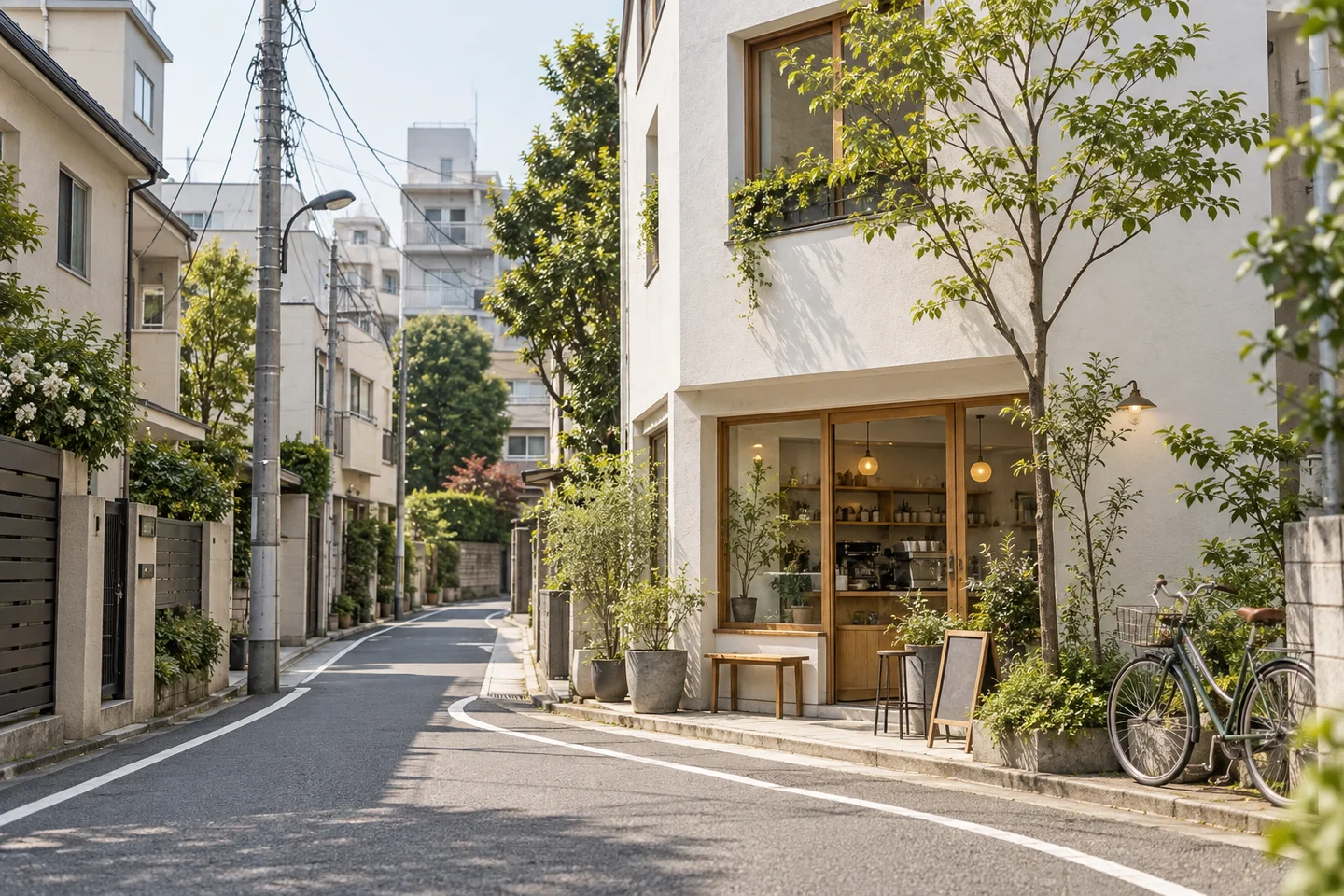
Tokyo is large; your daily world can be small
Planning a first Tokyo business trip can make accommodation search results feel overwhelming. Every district has an image and every station appears convenient. Yet the Tokyo you use may consist of an office, a home, a few shops, and a weekend walk. The aim is not to find a district perfect for everyone, but a small part of the city where your own routine works.
Enter the work address into a map, check the building and usual entrance, then search for accommodation. The district in an address may be much larger than your useful search area. Properties near the same station can also lie in different directions. Filtering only by famous names can hide practical options. Focusing on the streets you will actually walk reduces information overload.
Treat candidate neighborhoods as starting points and add your routines. Put work, housing, shopping, and rest on one map and see how they connect. Then check transport for actual working dates and compare rooms and costs. This moves the question from whether you like a district to how it supports your week, making choices easier to discuss with companions.
Map three kinds of movement, rather than one route
First comes the daily commute: when must you arrive and when do you usually leave? Second are work trips to another office, clients, or venues. Third are everyday journeys for dinner, shopping, laundry, and exercise. Separate these groups to see which destinations deserve proximity and which occasional visits need not outweigh daily convenience.
Include the entire journey from leaving home to arrival. Train time is only one segment; platform access, transfers, and walking after the station also count. A major station's name can be appealing, but its usefulness depends on your exits and lines. The nearest station and the best station for your office may, or may not, be the same.
Compare fewer transfers with a longer walk against shorter train time with more complicated movement. The answer depends on luggage, energy, working hours, and frequency. For everyday use, an understandable route that remains acceptable in rain may matter more than a few minutes displayed on a map.
Consider a hypothetical five-day week. Four days at one office and one elsewhere call for a different housing approach from visiting a different client every day. The first can prioritize its most frequent route; the second needs the week's combined journeys. Ask how often each trip occurs before asking how long it takes, and one attractive search result becomes less likely to dominate.
Near Tokyo Station, check which side your destination is on
Tokyo Station, Marunouchi, and neighboring areas can provide a starting point for central Tokyo work. Official tourism information also groups Tokyo Station and Marunouchi as an area, but accommodation choices still depend on the office's exact position. Do not stop at near Tokyo Station: identify the entrance, any station crossing, and the final walk. Each affects daily use.
If you work here, identify straightforward routes into the appropriate side, then compare monthly accommodation farther along them. You need not decide in advance to live beside the office or outside the center. Compare total price, the full commute, in-room working conditions, and how easily you can eat and shop after returning, all on equal terms.
Check evening life separately. Places busy during office hours do not necessarily contain the shops you will use after work; weekends may bring different needs. Verify current opening information rather than counting map icons. You are looking for a usable routine, not the largest collection of markers.
Around Shinjuku, turn transport options into actual routes
Shinjuku is a major area covered by Tokyo's official tourism information and connects several rail lines. That creates directions to explore, but not an identical commute for every listing carrying its name. If work spans several locations, check your regular lines and the property's direction before treating numerous transport options as personal convenience.
Door-to-door comparison is especially useful around major stations. Be able to describe the street you walk, the entrance you use, and the exit you take home. If carrying equipment or substantial luggage, check an appropriate path. Arrival and daily commuting can follow different routes; one arrival journey need not make you take a detour for the rest of the month.
Streets within the same named area also differ. A district name cannot guarantee quiet, convenience, or suitability for nightlife. Ask for property-specific details such as window direction, nearby roads, and entry arrangements, and read current descriptions. Turning an area's image into checkable details helps keep expectations closer to reality.
Include Kanagawa journeys if work crosses the boundary
If you travel between Tokyo and Kanagawa each week, do not decide which side to stay on solely from administrative borders. List exact destinations and weekly visit counts, then compare bases. A property can serve one Tokyo location well and another poorly. Close to Tokyo cannot replace checking a route to your actual office address.
Areas such as Shinagawa can be starting points for comparing southern Tokyo accommodation, but suitability depends on work routes and available properties. Tabulate a week's journeys, distinguishing ordinary office days from client visits. Whether an occasional long trip is acceptable or every day must be simple should follow your work rhythm, not the familiarity of a name.
Meeting finish times matter for cross-area travel. Check evening returns, delayed departures, and weekend journeys as well as the best morning route. You do not need perfection in every situation. You need to know which days may be tiring so housing and scheduling can work together, instead of discovering conflicts after booking.
Read the neighborhood through after-work needs
Open a listing's map and imagine a weekday dinner route. Do you want to sit down, bring prepared food home, or buy ingredients? Each needs a different local offering. Numerous restaurants do not guarantee suitable hours or food. One regularly used shop on your way home may support daily life better.
Add laundry, rubbish arrangements, and household supplies. They need not all be near the station, but their place in the workweek should make sense. Confirm actual equipment if laundry is in the room; include the journey if it is elsewhere. A lively district does not mean an individual property contains everything you need.
Leave an outlet for rest: a short after-work walk or a street you would revisit at weekends need not be famous. These preferences are personal and can be explored through maps, official area introductions, and walks after arrival. Longer stays need not deliver constant novelty. A small activity that feels good repeatedly is a useful sign of fit.
For accompanying family, draw another map for whoever stays away from the office during the day. A station useful to the worker may not be the companion's daily priority. Include walks, shopping, and routes back to rest, making the neighborhood itself a living area. This is about seeing everyone's week, rather than promising every preference can be met.
Three candidates are enough to start comparing real rooms
Once the main commuting directions are clear, narrow the search to roughly three groups instead of collecting every attractive room. Use the same dates, guest numbers, and essentials to compare full transport, total cost, workspace, and daily routes. Mark missing details as unconfirmed. Filling them with probably convenient makes a table look complete while hiding assumptions.
Give accommodation providers concrete needs, such as the number of in-room meeting days, evening arrival, or companions. You need not disclose unrelated work secrets, but explain what needs checking. Verify transport yourself and use the current property information for equipment and usage rules. Both kinds of evidence are needed for a decision.
The district you choose need not be the name you knew best before departure. If it connects work, rest, and daily tasks simply, it can become familiar over a month. Tokyo's appeal includes learning which street you want to take home today, not merely how many districts you can visit. Choose a workable base first; the rest of the city can unfold gradually.
Save listing links, search dates, and outstanding questions. Before booking, check availability, prices, and cancellation conditions again. Search screenshots are comparison records, not substitutes for currently valid information. This habit also makes it easier to explain the eventual choice to your employer or companions.
About this article and references
- Content and references
The official resources below cover the areas discussed here. Check them for current transport, opening hours and services when planning your visit.
- Image information
- This illustrative image was created with AI for LIVIA. It is not a photograph of a listed home and does not represent actual amenities, views or streetscapes.
- Publisher's role
- LIVIA publishes this article as a rental service provider. It includes information and links introducing our properties and related services.