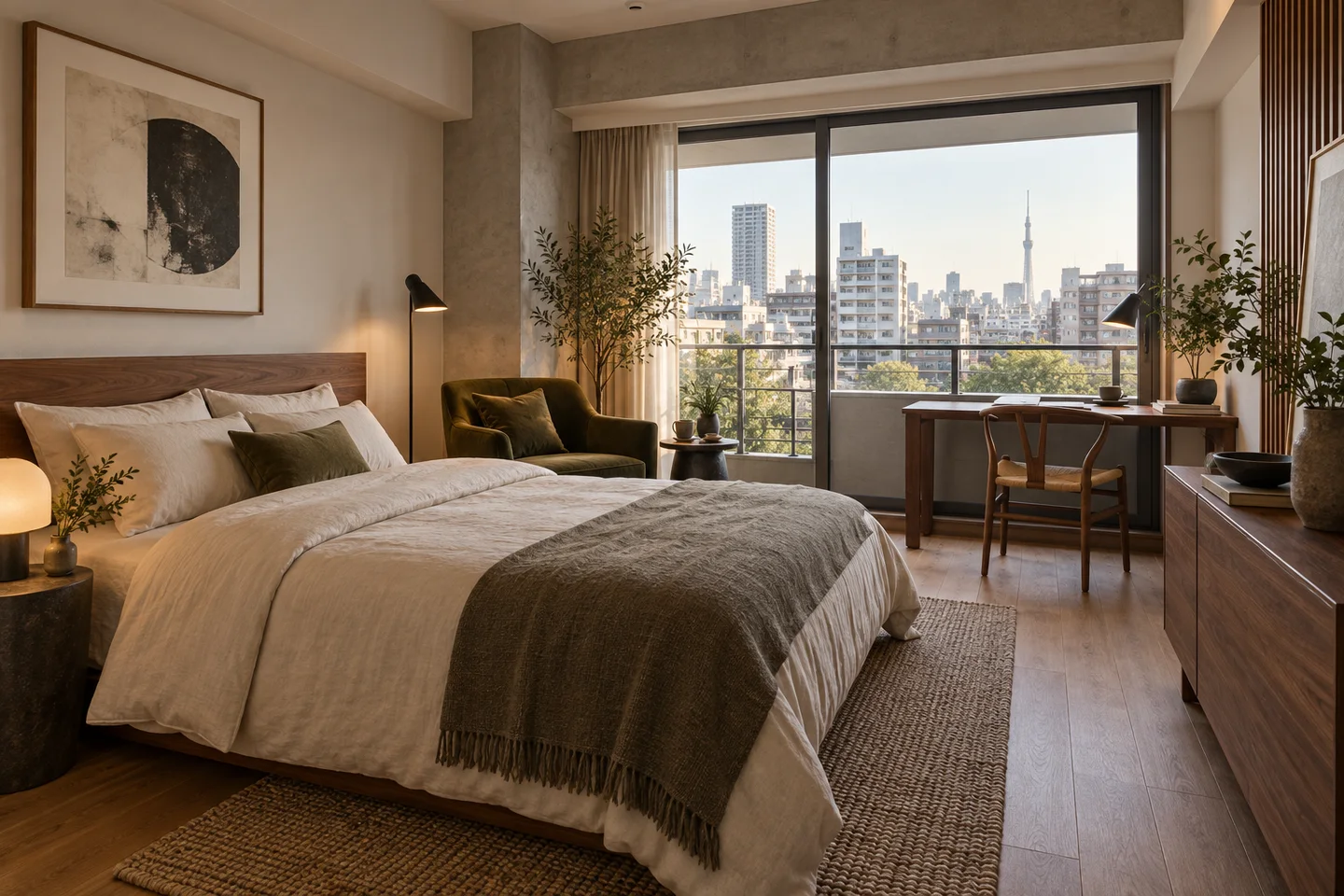
One night can include very different kinds of convenience
The easiest part of extended accommodation to compare is the nightly price. The easiest part to overlook is the routine behind it. Some travelers want to return and rest without arranging cleaning or laundry; others value breakfast on their own schedule and a consistent desk. After a month, these repeated details often matter more than the most beautiful photograph on the booking page.
Hotels and furnished monthly accommodation can both suit business travel. Their names cannot decide for you: facilities, services, and contracts vary widely. Some hotels allow simple cooking, while some furnished properties offer separately arranged cleaning. Ask what each actual option provides, using its current description and quotation, rather than applying an impression of one accommodation category to every property.
For a month in Tokyo or Kanagawa, begin by asking how much daily work you want someone else to handle. A packed schedule may call for clearly arranged services; maintaining your own meal and laundry routines may require independently usable space. Knowing which tasks you will take on makes both extra spending and savings meaningful.
You can also remove services you will not use from the comparison. A long list does not make every item worth paying for. Understanding your own routine makes the choice clearer.
Freedom over meals includes shopping and clearing up
At first, eating out is part of exploring. After a week of late returns or back-to-back meetings, you may want a simple, familiar dinner. The ability to store, heat, or prepare food then matters more than dining-table styling. Decide whether you need full cooking facilities, occasional reheating, or just refrigeration for breakfast and drinks; each requires different equipment.
A kitchen label leaves many details unanswered. Confirm cookware, tableware, refrigerator space, cleaning supplies, and permitted appliances. Two diners also need sufficient seats and dishes. Do not assume seasonings are provided or buy a complete set of supplies on arrival. Start with a few actual meals to discover what you will use.
Preparing food is not invariably cheaper. Shopping, managing leftover ingredients, and cleaning take time. Its value may instead be control over portions, timing, and familiar flavors. If this month is about conserving energy for work, services that simplify meals have value too. Neither eating out nor cooking needs to follow someone else's ideal lifestyle.
Think about laundry and cleaning across the whole month
For a few nights, you can take dirty clothes home. A month needs a sustainable routine. In-room, shared, and off-site laundry each require different planning. Besides checking for a washing machine, ask about drying, operating hours, additional charges, and instructions. Do not assume every property lets you wash clothes and wear them again immediately.
Picture the busiest workweek: when will you wash, where will you wait, and how will you dry or collect everything? Off-site laundry may call for larger batches. In-room facilities still need to fit rest and usage rules. A small difference repeated over several weeks affects both how much clothing to pack and how much personal time remains after work.
Break cleaning into room cleaning, towels, sheets, rubbish, and consumable supplies, since arrangements may differ. Establishing what is included and what you handle is clearer than simply asking whether cleaning exists. Some guests like scheduled service; others prefer fewer interruptions. The issue is maintaining comfort while working, rather than maximizing service items.
A workspace needs good posture and easy transitions
If you will work in the room, move your attention from overall styling to the desk and chair. Is there space after setting down a laptop? Does the video background work? Are outlets convenient? These questions are more useful than a claim that work is possible. Frequent callers should also check internet information and room-use conditions, without treating unverified speed or quietness as guarantees.
Floor area alone cannot explain usability. Some layouts lose their passageway when luggage opens; others separate sleeping, eating, and working a little. Imagine starting work and switching to dinner afterward. Moving many belongings at each transition creates a daily task. Floor plans, desk and chair photographs, and storage locations can reveal more than a wide-angle room view.
For two people, consider activities happening together: one sleeps early while the other answers emails, or one makes a call while the other eats. More space is not always the only answer, but the layout must be understood. Imagining half an hour on an ordinary worknight often reveals overlooked lighting, seating, and circulation needs.
Support matters most when something goes wrong
When equipment works, contact information can seem incidental. An entry question or malfunction makes it essential. Confirm response channels, supported languages, normal contact hours, and where to turn for different situations. Useful service is not necessarily the longest list: it is something you can find and understand when needed, with clear expectations.
Compare arrival procedures too. Follow the property's latest instructions for advance information, identity checks, and receiving keys or access details. Ask beforehand about late flights or companions arriving another day. A process that worked at a previous accommodation does not establish how this one operates.
A property with fewer services may suit someone who wants to organize daily life independently, but allow time to read instructions and handle small tasks. More service may reduce effort while fitting privacy or schedule preferences less well. The comparison is about matching support to how you use the room, especially on your busiest and most tiring days.
Turn a nightly rate into a comparable total
Use identical dates, guest numbers, and requirements for meaningful price comparisons. Separate the accommodation charge, mandatory extras, and optional services, then total what you will use. Cleaning, utilities, additional occupants, laundry, and other inclusions cannot be inferred from the accommodation category. A clear breakdown also helps explain your choice to your company beyond presenting the lowest number.
If work could end early or continue longer, read cancellation and change conditions. Before booking, understand restrictions attached to lower quotations, whether extensions require new availability checks, and how paid amounts are handled. An invitation to inquire does not guarantee a change. Flexibility may reveal its value only when the project schedule shifts.
Add a column for your own time: separate laundry trips each week, meal detours, and responsibility for cleaning. You need not convert this into an hourly wage; simply make the differences visible. A cheaper option that fits your routine is a good choice. A more expensive one that removes a frequent burden may have an equally sound justification.
Make the final choice on your most tired day
If two options remain close, imagine more than a sunny day off. Work has overrun, rain is falling, and you need laundry and a simple meal. Which accommodation makes those tasks easier? Which entry and support instructions would still be clear when tired? Long-stay comfort often means life works with limited energy, rather than resembling a perfect promotional photograph every day.
A mixed arrangement is also possible: start somewhere easy while adapting, then move after understanding your work rhythm. But every move brings packing, transport, and another unfamiliar environment. Decide whether that effort fits your trip. Do not add unnecessary work simply for the appearance of flexibility. Compare one base and split stays across the entire month.
Before deciding, turn your priorities into short questions, obtain specific answers, and save the current price and conditions. You do not need to establish whether hotels or furnished rentals are always superior; you need a solution for this trip. When the room supports your routine, time outside work becomes your own again. That may matter more than another rarely used facility.
Include the expense process. If your employer requires approval, a particular payment method, or specific document details, check with both the company and accommodation before confirming. Completing administration early lets you focus on daily life after arrival instead of chasing details across time zones. It is an easily skipped comparison step that directly affects how smoothly the trip runs.
About this article and references
- Content and references
This article offers LIVIA's general suggestions for planning a work stay. Check the individual property page and your agreement for specific amenities, charges and conditions.
- Image information
- This illustrative image was created with AI for LIVIA. It is not a photograph of a listed home and does not represent actual amenities, views or streetscapes.
- Publisher's role
- LIVIA publishes this article as a rental service provider. It includes information and links introducing our properties and related services.